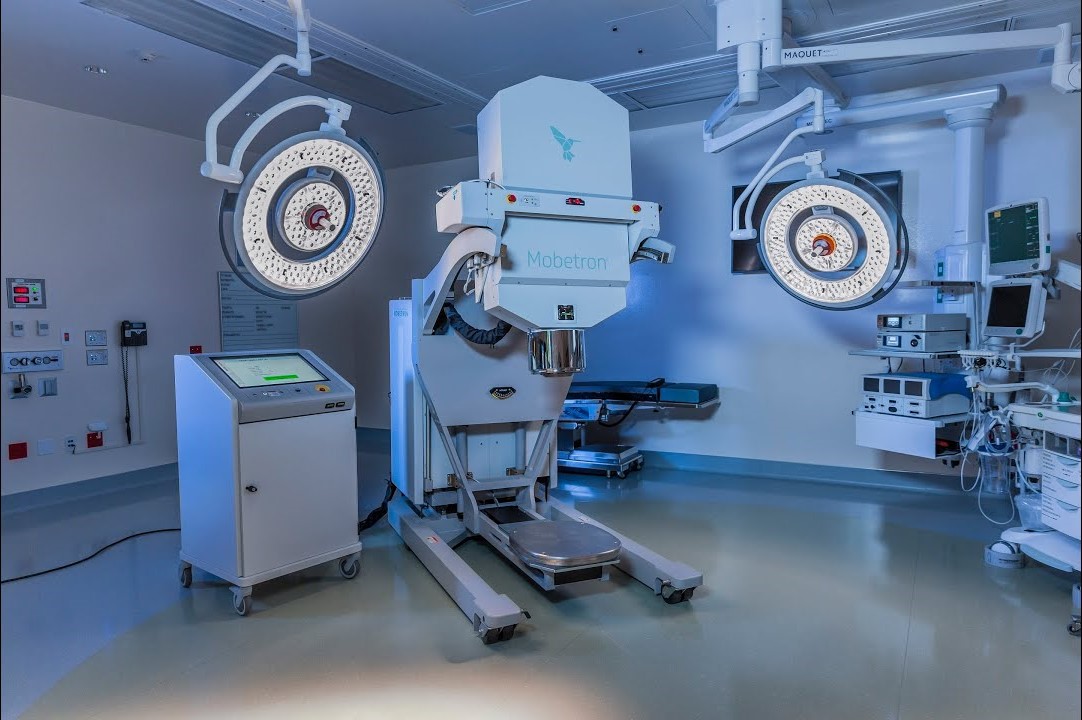
IntraOperative Electron Radiotherapy – Mobetron by IntraOp
Description:
Our flagship product—the IntraOp® Mobetron®—is used by the leading cancer physicians in the best hospitals, clinics and academic centers in the world.
The Mobetron is the first mobile, self-shielded
electron-beam
linear accelerator (LINAC) machine designed to deliver Intraoperative Radiation Therapy (IORT) to cancer patients during surgery.
This innovation brings safe, reliable and portable radiation to the operating room without the need for costly shielding renovations or retrofits.
And in turn, Mobetron underscores IntraOp’s commitment to providing a solution designed to maximize cost effectiveness and reduce risk for cancer centers and their patients alike.
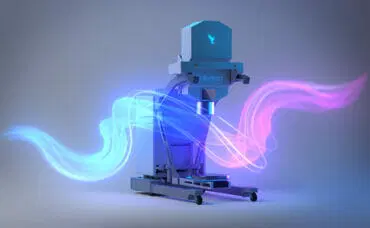
Precision Treatment in Microseconds
IntraOp is the first to provide ultra-high dose rate (UHDR) electron therapy for preclinical investigation of FLASH on an established clinical platform.
Why IntraOp for FLASH?
- Approved for trials
- Platform stability
- Simplicity of electrons
- Dynamic pulse modulation
- Larger clinical volumes
- Proven clinical platform
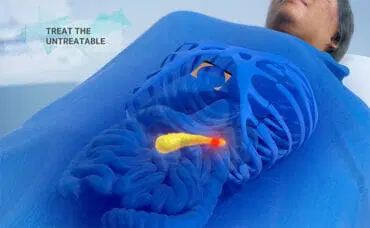
Treat the Untreatable
Pancreatic cancer remains a lethal malignancy, and yet recent studies reveal that the precision of electron-based IORT with Mobetron delivers greater control.
And therefore a greater advantage for more PDAC patients.
Why IntraOp for Pancreatic Cancer?
- Treat more patients
- Higher median survival
- Greater local control
- Equivalent post-op complications
- No increase in readmission

Electron Therapy for Skin Cancer
IntraOp provides a convenient, non-invasive alternative to surgery. Electron therapy enables patients to keep living their active lives with little to no recovery time.
Why IntraOp for Non-melanoma Skin Cancer?
- Compact design
- Greater precision
- Enhanced productivity
- Excellent cosmesis
- No scarring
- Lower cost of ownership
In modern treatment, nearly every leading cancer program uses some form of radiation to augment surgery. Historically, radiation therapy involved a time-consuming and imprecise external procedure that put a patient’s healthy tissue and organs at greater risk. Indirect doses of radiation were administered before or after the surgical procedure. Sometimes it was both. Intraoperative Radiation Therapy (IORT) revolutionized that traditional model by administering radiation during the surgical process. It’s safer, more accurate and it saves the hospital and the patient a considerable amount of time. And time is money. Beyond that, clinical data confirms that successful outcomes with IORT are simply more consistent. The advantages are clear.
Why Electron IORT?
As effective as it is, IORT still has its share of critics. But those issues are largely rooted in bygone misperceptions related to patient transport and the considerable investment attributed to staff and capital equipment. The idea of radiation in the operating room previously required cost-prohibitive retrofits to ensure safe operation and shielding. During that time, IORT was based on proton-beam technologies and closely-related photon therapies. Fortunately, that era is over.
The game changed when IntraOp introduced electrons to the equation. Targeted radiation using electron IORT delivered by a self-shielded unit meant that safe radiation could be brought to the operating room and in turn, to the patient. That innovation enabled portability and further reduced overall costs while improving dose distribution and consistency with more rapid fall-off rates of radiation and lesser damage to surrounding normal tissues. Shorter treatment times and less invasive surgery now equates to greater patient comfort during treatment and shorter recovery times with improved cosmesis following surgery.